
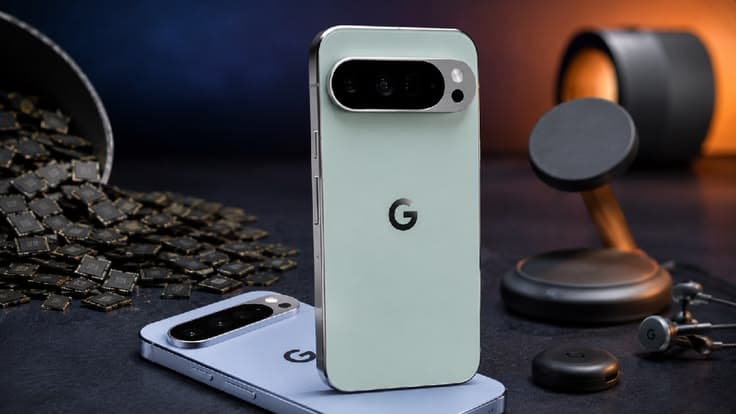
Google Pixel 11 Review: How Gemini AI's "Magic Capture" Actually Works
Google's Pixel 11 series brings Gemini Intelligence to the forefront, with Magic Capture leading the camera upgrades. Here's the full breakdown of specs, AI features, and whether it's worth buying.
Google's Pixel 11 series launched on August 12, 2026 at the Made by Google event, and while the hardware got real upgrades, the headline story is Gemini Intelligence running the show. Of everything Google announced, one camera feature is generating the most buzz: Magic Capture. Here's what the Pixel 11 actually offers, how Magic Capture works under the hood, and whether it lives up to the hype.
Pixel 11 Lineup: Price and Specs at a Glance
Google shipped four models this year, all priced $100 higher than their predecessors due to rising memory and chip costs.
- •Pixel 11: starts at $899, ships with 12GB RAM, base storage now starts at 256GB (the 128GB tier is gone)
- •Pixel 11 Pro: starts at $1,099, ships with 16GB RAM
- •Pixel 11 Pro XL: starts at $1,299, also 16GB RAM
- •Pixel 11 Pro Fold: starts at $1,899, ships alongside the rest of the lineup this year instead of launching separately
- •All four models are powered by the new Tensor G6 chip, Google's first smartphone processor built on TSMC's 2nm N2 process
- •Google claims Tensor G6 delivers roughly 20% better power efficiency, 25% faster web browsing, and 15% faster app loading compared to the Pixel 10 generation
- •On-device AI processing is up to 3.5 times faster while using up to 3.5 times less power, according to Google, thanks to a TPU with 50% more compute paired with the latest Gemini Nano model
- •Pre-orders opened August 12, with phones shipping and hitting stores on August 20, 2026
Camera Hardware Upgrades
Before getting into the AI side, the physical camera hardware also moved forward this generation.
- •A new 48MP main sensor offers 56% more light sensitivity than the Pixel 10's main camera
- •The 5x telephoto lens jumps from 20x Super Res Zoom to 30x SuperRes Zoom, with the Pro XL reaching up to 120x Magic Zoom through the new image signal processor
- •The 13MP ultrawide and selfie cameras carry over largely unchanged from last year
- •Instant Night Sight on the Pro and Pro XL is roughly 4.5 times faster than before, improving low-light shots noticeably
- •The redesigned all-glass Camera Bar is 40% thinner than the Pixel 10's, and sits nearly flush when using an official case
- •Pro models get a new 4K Portrait Video mode, powered by a dedicated "Metis" image signal processor and a custom accelerator built into Tensor G6
How Magic Capture Actually Works
Magic Capture is Google's answer to the constant dilemma of choosing between shooting a photo or a video in a fast-moving moment. Here's the actual mechanism behind it.
- •You tap once and hold, and the Pixel records a short burst that combines both video and a rapid sequence of still frames, rather than forcing you to pick a mode beforehand
- •During that session, Magic Capture analyzes between 400 and 500 frames, depending on the source and session length, using a combination of on-device intelligence and cloud-connected Gemini models
- •The system identifies the sharpest, best-composed, and best-timed moments from that frame set, whether that's a child's genuine smile, a pet mid-motion, or a basketball frozen at the peak of a jump
- •From the selected frames, it outputs high-quality 12-megapixel still photos that are ready to share immediately, without manual cropping or editing
- •Alongside the stills, Magic Capture also produces an edited video clip from the same capture session, so you get both formats from a single tap
- •Light automatic edits are applied to the selected photos, including cropping, straightening, and unblurring, so the output looks camera-ready rather than raw
- •Google specifically designed this for unpredictable, blink-and-you-miss-it moments, like a baby's fleeting expression or a pet doing something photogenic for two seconds, where manually timing a photo shutter almost always fails
In practice, this shifts the skill required from "timing the shot correctly" to "recognizing the moment is worth capturing at all," letting Gemini handle the timing precision that's genuinely hard for a person to nail consistently.
Gemini Intelligence: The Bigger Picture Beyond the Camera
Magic Capture is really just one visible piece of a much larger AI push. Google is positioning Gemini Intelligence as a layer that works proactively across the entire phone, not a chatbot you have to open.
- •Gemini can now perform multi-step autonomous tasks, including booking rides and ordering groceries across third-party apps without you manually switching between them
- •Circle to Search is now available directly inside the camera viewfinder, letting you identify objects, translate text, or search your surroundings without leaving the camera app
- •A new real-time video, podcast, and voice message translation feature works across supported languages
- •Google introduced Sign Language-to-Text (SL2T), an accessibility model trained on more than 100,000 hours of sign-language data across more than 50 languages, letting users sign to the camera and have it converted to text through Gboard and Live Transcribe
- •Proactive location insights show up on the lock screen, so if you're waiting at a new restaurant, Gemini can surface top menu items or popular seats pulled from hundreds of reviews and photos, without you asking
- •Gemini's voice input tool, called Rambler, automatically cuts filler words from dictated text and supports multi-step voice commands
The Catch: RAM Requirements and Real-World Limits
Not everything about the AI rollout is straightforward, and it's worth being clear-eyed about the limits.
- •Google's own stated minimum for running Gemini Intelligence properly is 12GB of RAM, and the base Pixel 11 does ship with 12GB, meeting that floor, though early leaks had suggested the base model might ship with less
- •AI-generated summaries, suggestions, and autonomous actions still require human review, particularly for anything involving publishing, financial decisions, legal matters, or sensitive communications, since accuracy isn't guaranteed
- •How proactive Gemini Intelligence can be depends directly on how much app and data access you grant it, meaning the most useful version of the assistant is also the version reading the most about your daily activity
- •Camera improvements outside Magic Capture are largely described by reviewers as iterative rather than revolutionary, meaning the generational leap is concentrated more in software than in raw sensor hardware
Should You Buy the Pixel 11 for Magic Capture Alone
If you're upgrading primarily for the AI camera experience, Magic Capture is a genuinely practical feature rather than a gimmick, since it solves a real, common problem: missing a great shot because you were in the wrong capture mode. That said, if you're coming from a Pixel 10, the jump is closer to a refinement than a reinvention. If you're on a Pixel 8 or older, the combination of Tensor G6's efficiency gains and two generations of camera and AI improvements makes the case for upgrading considerably stronger.
Frequently Asked Questions
What is Magic Capture on the Google Pixel 11?
Magic Capture is a Pixel 11 camera feature that captures both video and a burst of still frames with a single tap, then uses on-device intelligence and Gemini models to analyze roughly 400 to 500 frames and automatically select the best-timed, sharpest 12-megapixel photos, along with an edited video, ready to share without manual editing.
How much does the Google Pixel 11 cost?
The base Pixel 11 starts at $899, the Pixel 11 Pro starts at $1,099, the Pixel 11 Pro XL starts at $1,299, and the Pixel 11 Pro Fold starts at $1,899. All four models are $100 more expensive than their Pixel 10 equivalents due to rising memory and chip production costs.
Does the Pixel 11 have enough RAM to run Gemini Intelligence properly?
Yes. The base Pixel 11 ships with 12GB of RAM, which matches Google's own stated minimum requirement for running Gemini Intelligence smoothly, while the Pro and Pro XL models ship with 16GB.
When does the Pixel 11 release and is it worth upgrading from the Pixel 10?
The Pixel 11 lineup began shipping and hit stores on August 20, 2026, following pre-orders that opened August 12. For Pixel 10 owners, most reviewers consider it an iterative upgrade rather than essential, since the camera hardware gains are incremental. For anyone on a Pixel 8 or older, the combined jump in chip performance, camera hardware, and Gemini Intelligence features makes the upgrade considerably more compelling.