
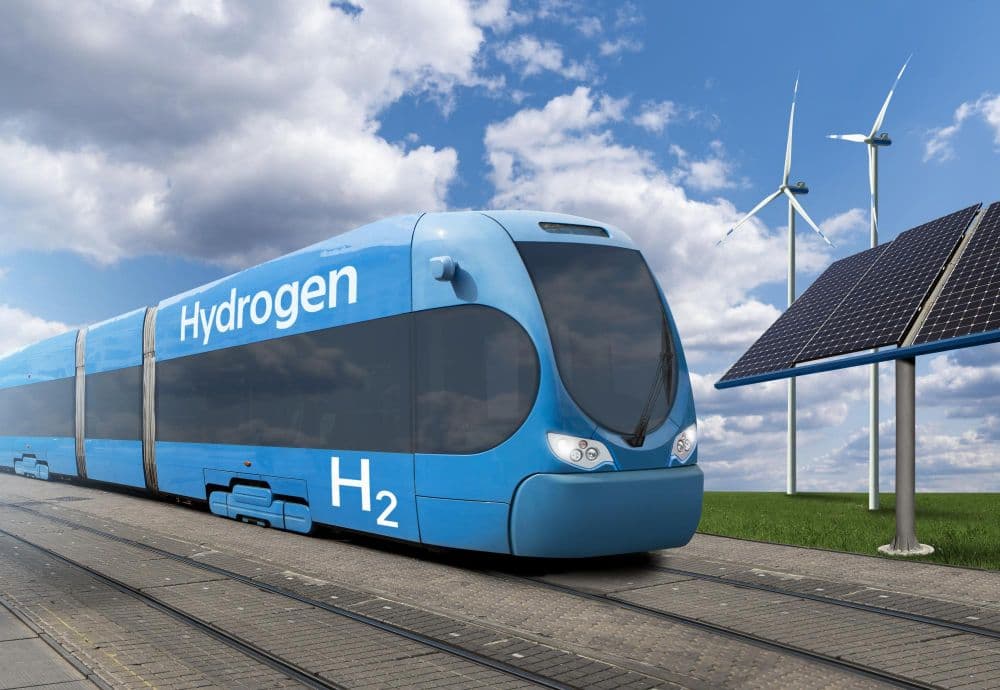
India's First Hydrogen Train (2026): NaMo Green Rail Explained
India launched its first indigenously built hydrogen-powered train, the NaMo Green Rail, in July 2026. Here's how it works, its specs, and what it means for green transport innovation.
On July 17, 2026, India officially entered the small global club of countries running hydrogen-powered trains. Prime Minister Narendra Modi inaugurated the country's first indigenously designed and built hydrogen fuel cell train — dubbed the "NaMo Green Rail" — on the Jind–Sonipat route in Haryana, marking a major milestone in India's push toward sustainable, low-emission rail transport. This isn't just a symbolic launch. It represents years of engineering work by Indian Railways' Research, Design & Standards Organisation (RDSO), a dedicated hydrogen storage and refuelling facility built specifically for the project, and a broader national strategy to decarbonize one of the largest railway networks in the world. Here's a complete breakdown of what the train is, how it works, and why it matters.
What Is the NaMo Green Rail?
The NaMo Green Rail is India's first domestically designed, developed, and manufactured hydrogen-powered train — a name combining an abbreviation of Prime Minister Narendra Modi's first and last names. It runs on the 89–90 km Jind–Sonipat section of Northern Railway in Haryana, making two return trips each day.
Unlike a conventional diesel or electric locomotive, the train generates its own electricity onboard using a hydrogen fuel cell system, rather than drawing power from overhead electric lines or burning diesel fuel.
Key Technical Specifications
- •Propulsion system: A 1,200 kW hydrogen fuel cell propulsion system
- •Primary energy source: A Proton Exchange Membrane Fuel Cell (PEMFC), which generates electricity by reacting hydrogen and oxygen across a proton-conducting polymer membrane, producing only water vapor and heat as byproducts
- •Train configuration: A 10-coach trainset, with two motor cars carrying the hydrogen power units at either end and eight passenger cars in between
- •Passenger capacity: Around 2,600 passengers
- •Speed: Approved to operate at a maximum speed of 75 km/h, with a design speed of 110 km/h
- •Backup power: Each motor car is also equipped with lithium-based battery support alongside the fuel cells
- •Fuel cell technology: Reports indicate the train uses Canadian fuel cell technology integrated into its indigenous design
To put the fuel efficiency in context: hydrogen is a high-energy fuel at roughly 120 megajoules per kilogram, compared to diesel's 43 MJ/kg — nearly three times the energy density, while requiring lower maintenance and producing a far smaller carbon footprint.
The Infrastructure Behind the Train
Running a hydrogen train requires more than just the train itself — it requires an entirely new fuel supply chain. To support the NaMo Green Rail, Indian Railways established the country's largest railway hydrogen storage and refuelling facility at Jind, Haryana, along with a dedicated 11 kV power supply to run the hydrogen production and refuelling plant.
The train underwent an extensive testing process before entering passenger service, including emergency braking evaluations, running stability tests, and oscillation testing, to ensure it met operational safety standards.
How Hydrogen Trains Work
Hydrogen fuel cell trains generate their own electricity onboard rather than relying on an external power source. Hydrogen stored onboard combines with oxygen from the air inside the fuel cell, producing electricity to power the train's motors — with water vapor as the only direct emission. This makes hydrogen propulsion one of the cleanest currently available technologies for rail transport, particularly on routes where full electrification isn't practical or cost-effective.
India Joins a Small Global Group
With this launch, India joins a select group of countries that have deployed hydrogen-powered trains, including Germany, Japan, China, France, Italy, and the United States. Germany was the first country to commence commercial hydrogen train operations, launching the world's first hydrogen-powered fleet back in 2022, while several other nations remain at the pilot-project stage with smaller two-to-four-car trains typically used for regional services.
By comparison, India's hydrogen train features a larger, more extensive 10-coach structure, which analysts have described as a more foundational step for scaling hydrogen propulsion technology further, rather than a limited regional pilot.
Why Hydrogen — When India's Railways Are Already Mostly Electrified?
India has already electrified almost all of its roughly 70,000 km railway network, one of the largest rail systems in the world. So why invest in hydrogen at all?
The answer lies in the gaps that electrification can't easily fill. Hydrogen-powered trains are designed to serve routes where overhead electrification isn't feasible or cost-efficient — remote lines, low-traffic routes, or terrain where installing electric infrastructure would be prohibitively expensive. Hydrogen propulsion offers a zero-emission alternative to diesel on exactly these routes, without requiring the capital investment of full electrification.
Part of a Broader Green Rail Strategy
The NaMo Green Rail isn't a standalone initiative — it's part of India's wider push to expand hydrogen use and cut carbon emissions across its economy, with the government targeting net-zero railway operations by 2030. The project also reflects the broader vision of Atmanirbhar Bharat (self-reliant India), given that the train was designed and developed entirely within the country, from initial design through prototype manufacturing, in accordance with technical specifications prepared by RDSO.
This launch sits alongside other clean-energy pushes by the Indian government, including expanded renewable energy capacity and an advancing nuclear energy programme, positioning green hydrogen as one pillar among several in India's broader decarbonization strategy.
What This Means for Green Transport and Innovation in India
1. A Testbed for Scaling Hydrogen Technology Nationally
As the first operational deployment of its kind in India, the Jind–Sonipat route will function as a critical real-world testbed. The operational data gathered here — on fuel efficiency, maintenance costs, refuelling logistics, and passenger reliability — will directly inform whether and how hydrogen propulsion gets scaled to other non-electrified or hard-to-electrify routes across the country.
2. A Boost for India's Green Hydrogen Ecosystem
The dedicated hydrogen production and refuelling infrastructure built at Jind adds real, operational demand to India's broader green hydrogen ambitions — moving the conversation from policy targets to actual deployed infrastructure.
3. A Signal for Domestic Manufacturing Capability
Because the train was designed and built entirely in India — from concept through prototype — the project also serves as a proof point for India's capacity to develop advanced clean transport technology domestically, rather than relying solely on imported systems.
4. Momentum for India's Net-Zero Rail Target
With Indian Railways targeting net-zero operations by 2030, a working hydrogen train adds a concrete deployment to that roadmap — complementing the network's already extensive electrification with a viable option for the routes electrification can't easily reach.
5. Positioning India in the Global Hydrogen Rail Conversation
By deploying a larger, more extensive hydrogen trainset than the smaller regional pilots seen in several other countries, India has positioned its program as a potentially significant reference point in the global development of hydrogen rail technology — not merely a symbolic pilot.
Conclusion
India's first hydrogen train marks more than a single symbolic launch — it's a working proof-of-concept for how the country plans to close the gap between its electrified rail network and the routes electrification can't reach. Backed by dedicated infrastructure, indigenous engineering, and a clear net-zero target for 2030, the NaMo Green Rail positions India as a serious, scaling participant in the global shift toward cleaner rail transport — not just a country experimenting with the technology on the sidelines.
Frequently Asked Questions
What is India's first hydrogen train called?
It's called the "NaMo Green Rail," a name derived from an abbreviation of Prime Minister Narendra Modi's first and last names.
Where does India's hydrogen train operate?
It runs on the Jind–Sonipat section of Northern Railway in Haryana, covering approximately 89–90 km, with two return trips scheduled each day.
How does a hydrogen train work?
It generates electricity onboard using a hydrogen fuel cell, where hydrogen reacts with oxygen from the air to produce electricity, with water vapor as the only direct emission.
How fast can India's hydrogen train travel?
It is approved to operate at a maximum speed of 75 km/h, with a design speed of 110 km/h.
Which other countries operate hydrogen-powered trains?
Germany, Japan, China, France, Italy, and the United States have all introduced hydrogen-powered trains, with Germany being the first to launch commercial operations in 2022.
Why is India investing in hydrogen trains if most of its network is already electrified?
Hydrogen trains are designed to serve routes where full electrification isn't practical or cost-effective, offering a zero-emission alternative to diesel on those specific routes.